
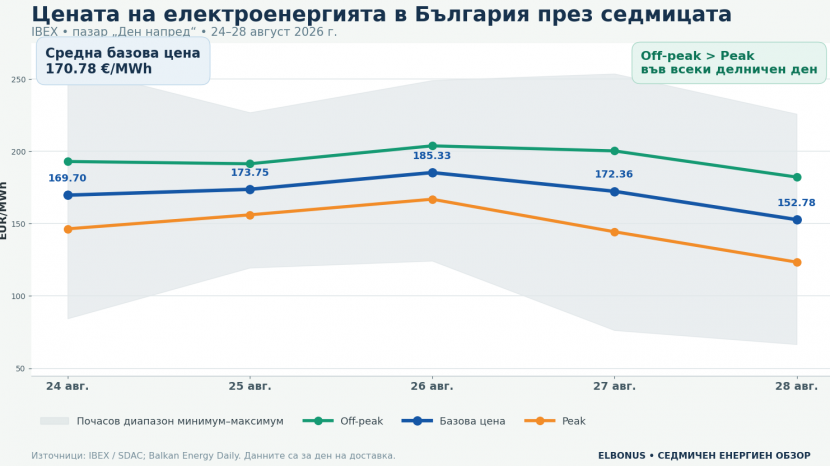
Electricity prices in Bulgaria, Romania and Hungary remained high between 24 and 28 August. One of the main contributing factors was reduced output from nuclear power plants along the Danube due to critically low river levels.
The average IBEX baseload price over the five working days reached €170.78/MWh. The highest daily price was recorded on Wednesday at €185.33/MWh, while the most expensive evening hours during the week reached as much as €258.70/MWh.
Nuclear generation constraints across the region
In Bulgaria, Unit 5 of the Kozloduy Nuclear Power Plant operated approximately 120 MW below its normal capacity. This was caused by the low level of the Danube, which made it more difficult to secure the required amount of cooling water.
In Romania, both reactors at the Cernavodă Nuclear Power Plant, which normally account for around 20% of the country’s electricity generation, were taken offline. This increased Romania’s need for imports and placed additional pressure on prices across the interconnected regional market.
Hungary’s Paks Nuclear Power Plant also experienced significant generation constraints. Some capacity was gradually restored, but the nuclear generation shortfall had already affected the regional electricity balance.
When low-cost and stable baseload generation is unavailable, it must be replaced by imports or more expensive thermal power generation. Due to the interconnected nature of the regional markets, a shortage in one country can also influence electricity prices in neighbouring countries.
The strongest pressure occurred after sunset
Another important factor during the week was the significant difference between daytime and evening prices. During hours of strong photovoltaic generation, electricity supply increased and prices declined. After sunset, solar generation dropped away while demand remained high.
At that point, the power system had to rely more heavily on nuclear generation, thermal power plants, hydropower and imports. Reduced nuclear availability, weaker wind generation and regional transmission constraints intensified the pressure on evening prices.
This explains why the off-peak price was higher than the daytime peak price on some days—an apparently unusual situation that illustrates the strong influence of the hours following the decline in solar generation.
Bulgaria remained a net electricity exporter
Despite the reduced output from the Kozloduy Nuclear Power Plant, Bulgaria maintained its position as a net electricity exporter. However, this did not insulate the Bulgarian market from high regional prices.
Bulgaria, Romania and Hungary remained strongly coupled in terms of pricing. When the region lacks a significant amount of nuclear baseload capacity, available electricity is directed towards the markets facing the greatest shortages, bringing national prices closer together.
Our outlook for the following week
Based on the analysed market data and the expected development of the main fundamental factors, our base-case scenario points to a lower average electricity price.
During the weekend, the baseload price could range between €110 and €120/MWh. For working days, we expect prices to remain predominantly within the €145–170/MWh range, with an average price of approximately €140–150/MWh for the following week as a whole.
However, the risk of high prices remains most pronounced during the evening hours. If nuclear generation constraints persist, wind output remains weak or regional import capacity becomes limited, individual evening hours could remain within the €190–225/MWh range.
The recovery of generation at the Kozloduy, Cernavodă and Paks nuclear power plants, together with changes in the Danube’s water level, will be among the main factors influencing regional electricity prices.
Important notice: The expectations presented above constitute ElBonus’s own market analysis, prepared on the basis of the information available at the time, observed market trends and certain assumptions. This material is provided for informational purposes only and does not constitute a guarantee of future electricity prices, an individual recommendation or an offer to enter into a transaction. Actual market developments may differ materially from the scenario described. Any commercial or management decision should be made on the basis of an independent assessment, and ElBonus accepts no liability for decisions based solely on this publication.